AI Imaginations
in association with the School of Creative Management, Goldsmiths, University of London
and the Department of Social Sciences, Humboldt University of Berlin
AI Imaginations – Digital Futures in Germany and Japan
The aim of the workshop is to investigate how societies imagine artificial intelligence (AI) and how these socio-cultural imaginaries shape innovation, policy, and human–machine relations. The project analyses ‘narratives’ engaging AI technologies including AI embodied robots and disembodied chatbots, in literature, films, artistic practices, public discourses, the visions of cultural economy and politics. By doing so, we can consider how and why public imaginaries of AI and its narratives are constructed and diffused various meanings and practices in order to better understand digital futures. Although research on AI ethics and the potential risks of AI has been extensively discussed, little attention has been given to the ways in which historical traditions, cultural narratives and political visions in different countries shape narratives of the AI technologies. Hence, our discussion will be based on a comparative analysis of these narratives to open transnational dialogue between Germany and Japan.
Date: Thursday 15 October, 2026
Time: 09:30-12:30
Venue: Deptford Town Hall, Room B109, Goldsmiths, University of London
Contact Tomoko Tamari for further information
Programme
09:30–09:35
Introduction by Dr Tomoko Tamari
09:35-10:05
The Representations of AI in Movies and TV series
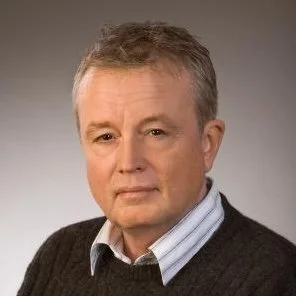
Professor Rainer Winter (University of Klagenfurt, Austria)
Lorem ipsum dolor sit amet, consectetur adipiscing elit. Vestibulum efficitur posuere ante at eleifend. Class aptent taciti sociosqu ad litora torquent per conubia nostra, per inceptos himenaeos. Morbi gravida risus quis augue suscipit egestas sit amet at diam. Vivamus mattis dui sit amet placerat malesuada. Sed nec quam cursus, consectetur velit sed, vestibulum eros. Maecenas scelerisque mollis est. Quisque sed elit rutrum, vestibulum urna dignissim, congue mauris. Vestibulum id justo gravida, tempus dolor nec, pretium velit. Sed sit amet est in nisl scelerisque vulputate. Pellentesque interdum sodales nulla eu volutpat. Donec vulputate scelerisque mauris tincidunt aliquet. Mauris tristique, sapien in suscipit congue, libero urna posuere nibh, at porttitor purus nisl sit amet tellus. Pellentesque sed mattis nisi. Maecenas non porta tellus. Pellentesque tempor dui in nulla posuere, in ultrices magna imperdiet. Nullam a justo id est pharetra molestie.
10:05-10:15 Q&A
10:15-10:45
AI as Protagonist and Mirror: Socio-Narratives in the Age of Algorithmic Storytelling
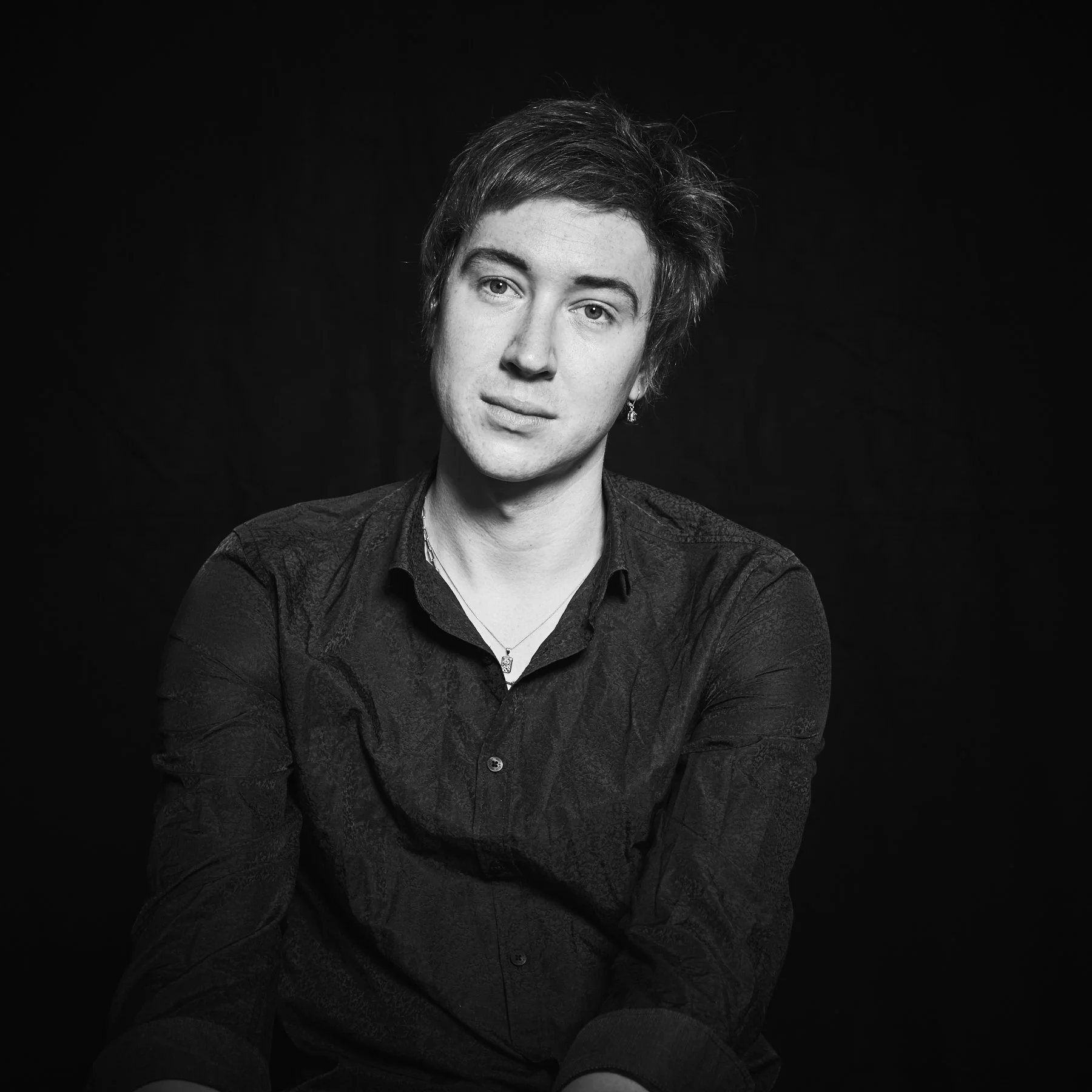
Dr. Marc Ortmann (Humboldt University of Berlin)
This talk examines artificial intelligence not only as a technological system, but as a cultural figure through which societies narrate themselves and their possible futures. It introduces the concept of AI socio-narratives: socially circulating narrative forms that make artificial intelligence meaningful by organizing hopes, fears, classifications, and visions of agency. From older myths of animated beings to contemporary generative media, AI companions, and political-technological imaginaries such as Society 5.0, the talk asks how AI becomes both protagonist and mirror of social life. Its central claim is that AI is not only narrated by society; it increasingly participates in narrating society. In the age of algorithmic storytelling, narrative responsibility therefore becomes a crucial social and political question.
10:45-10:55 Q&A
BREAK – 10 minutes
11:05-11:35
Wor(l)ding AI
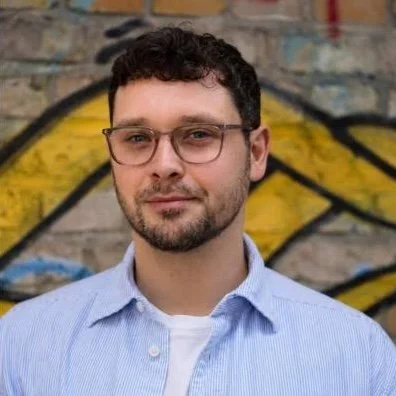
Philipp Weitzel (Humboldt University of Berlin)
Socio-Technical Imagination as Socionarratology, proposes a socionarratological extension of socio-technical imaginaries: while socio-technical imaginaries show how societies structurally envision desirable futures through technology, socionarratology specifies the narrative-practical mechanisms through which these futures become socially agentic. The intervention is not simply that AI is surrounded by narratives and counter-narratives, but that these narratives become operative through an identifiable grammar: plot, narrative authority, character position, temporality, affect, and medium/practice. I use this grammar heuristically to show how contemporary AI becomes plausible as a dominant socionarrative of prediction: opacity turns into authority, users are addressed as anticipated subjects, and delegation begins to feel like agency. Against this dominant grammar, I read Lord Byron's 'Song for the Luddites' and Olga Ravn's 'The Employees' as forms of counter-socionarration that do more than oppose dominant AI stories: they reconfigure the socio-narrative conditions under which technological futures can be imagined, inhabited, and contested. The talk's central claim is that AI's socio-technical imaginative power is not only computational or institutional, but narrative-practical: technological futures become operative through specific arrangements of plot, authority, subject position, temporality, affect, and medium/practice – and these arrangements can be analyzed, contested, and reconfigured.
11:35-11:45 Q&A
11:45-1215
Robots and Techno-animism in Japan: Posthuman and AI futures
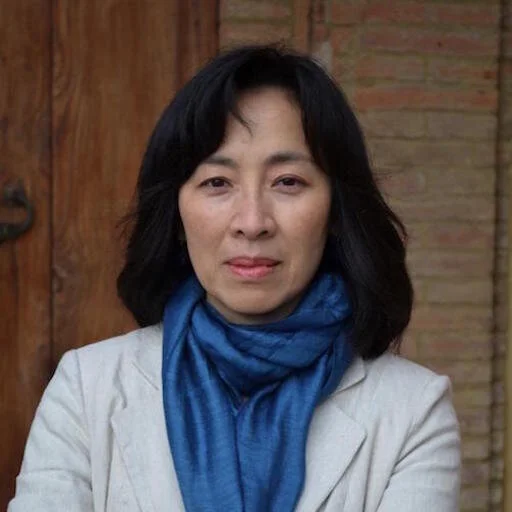
Dr Tomoko Tamari (Goldsmiths, University of London)
The paper attempts to scrutinize and deconstract the image of Japan as a robot-loving country. It is often acknowledged that Japan is a unique nation which have strong affection to artificial objects, including any kinds of mechanical devices and robots, which is arguably different attitudes from that of the Western countries. ‘Techno-animism’ is often applied to explain a specific Japanese cultural background. Animism refers to a belief of ‘anima(spirits) of artificial objects to co-hibit with affinity and reject boundaries between human and non-human realms. Combine with techno and animism can illustrate seemingly Japan’s ‘human-machine co-existence society’.
Lorem ipsum dolor sit amet, consectetur adipiscing elit. Vestibulum efficitur posuere ante at eleifend. Class aptent taciti sociosqu ad litora torquent per conubia nostra, per inceptos himenaeos. Morbi gravida risus quis augue suscipit egestas sit amet at diam. Vivamus mattis dui sit amet placerat malesuada. Sed nec quam cursus, consectetur velit sed, vestibulum eros. Maecenas scelerisque mollis est. Quisque sed elit rutrum, vestibulum urna dignissim, congue mauris. Vestibulum id justo gravida, tempus dolor nec, pretium velit. Sed sit amet est in nisl scelerisque vulputate. Pellentesque interdum sodales nulla eu volutpat. Donec vulputate scelerisque mauris tincidunt aliquet. Mauris tristique, sapien in suscipit congue, libero urna posuere nibh, at porttitor purus nisl sit amet tellus. Pellentesque sed mattis nisi. Maecenas non porta tellus. Pellentesque tempor dui in nulla posuere, in ultrices magna imperdiet. Nullam a justo id est pharetra molestie.
12:15-12:25 Q&A
Closing remarks